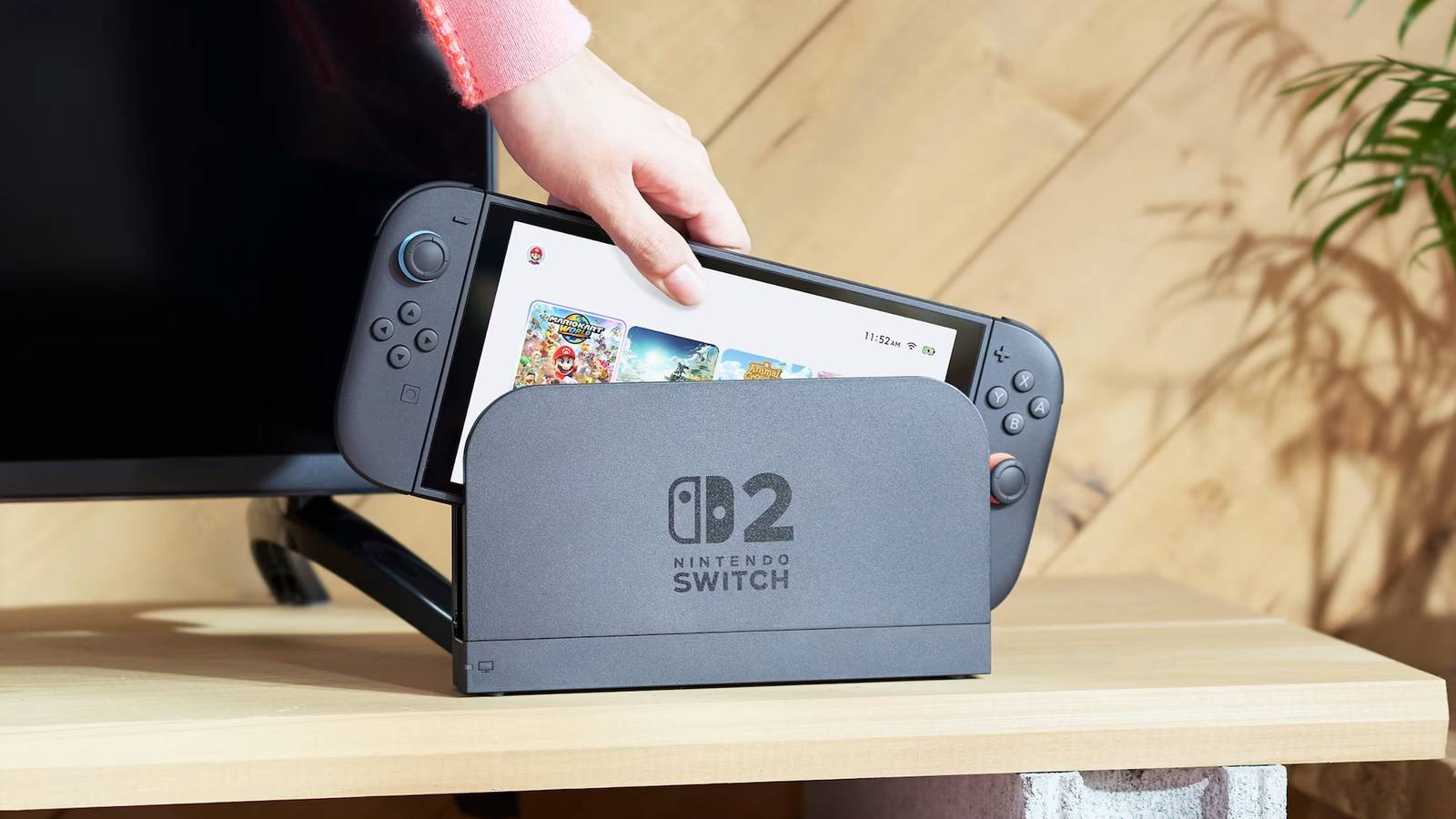
In April, when Nintendo revealed that the Switch 2 would cost $450, there was a palpable sense of shock. A full 50% higher than the launch cost of the Nintendo Switch, it was the company’s priciest console ever, even adjusted for inflation. During the cost-of-living crisis, the announcement went down like a lead balloon. Combined with miserly pricing decisions around some games and services, it left Nintendo looking like it was squeezing its users dry — a charge it has always been open to. The price also seemed like questionable tactics. It put the technically lightweight hybrid handheld console in direct competition with the big-boy home consoles as well as PC handhelds like the Steam Deck.
What a difference seven months can make. In the time since Nintendo revealed the Switch 2, Microsoft has increased the price of the Xbox Series X and S consoles not once but twice. An Xbox Series X now costs between $600 and $800. PlayStation 5 has also seen price hikes. Nintendo itself raised the price of the original Switch. Microsoft dipped a toe in the handheld market by collaborating with Asus on an Xbox-branded PC handheld. The base ROG Xbox Ally, with similar tech specs to the Switch 2, costs $600. The Xbox Ally X costs $1,000.
This will be the first console generation to end with higher prices than when it began. Inflation in most global economic markets is the key cause here, but it’s not the only one. Moore’s law, which defined the exponential pace of microchip development that could drive down the size and cost of silicon in the space of a few years — enabling abundant production of ever cheaper, more efficient consoles — has met the outer limits of physical and economic possibility, and no longer applies. Intense demand for silicon from industries like A.I. and automakers is keeping prices high and manufacturers tied up.
Simply put, it’s becoming very hard to make affordable, powerful consumer electronics. That’s going to hit makers of mass-market video game consoles as hard as anyone, perhaps harder.
This trend isn’t going away. Last month, Microsoft ominously indicated that the next Xbox will be a “very premium, very high-end” device in the mold of the $1,000 Xbox Ally X — perhaps closer to an enthusiast gaming PC than what we currently think of as a game console. It sounds as though Microsoft, faced with these difficult economic and manufacturing headwinds, has decided to opt out of the mass-market console race, make a play for an enthusiast niche, and use cloud gaming and publishing on other platforms to reach a broader audience.
Admittedly, Microsoft’s position in consoles was weak anyway — over the last two generations, Xbox’s hardware sales have slumped to a distant third place. What of Sony? The company has given next to no hints about what’s next and kept leaks to a minimum. We know there will be a PlayStation 6. But can Sony bring a significantly more powerful console than PS5 to market in the next few years without it also being significantly more expensive? The chances seem close to zero.
It’s also reported that Sony intends to get into handhelds with a device that can play PS5 games. Again, if parity with PS5 is the goal, it will be extremely tough for Sony to be competitive on price. Switch 2 and the entry-level PC handhelds it competes with in the $450-$650 range, like the Steam Deck, are generally thought to be closer to PS4 in terms of power.
Video game hardware is getting much more expensive at a time when few can afford it and spending on gaming is declining. Diminishing returns are in full effect, too, as the graphical leap from one generation to the next narrows. PlayStation 5’s strong sales performance has shown there will always be demand for a more powerful console, but the even greater success of the Switch and the rise of PC handhelds show that today’s gamers place, if anything, an equal value on convenience and portability. Meanwhile, the makers of the biggest games in the world — Minecraft, Roblox, Fortnite — have chosen to opt out of the tech arms race and adopt an “it runs on anything” strategy.
In this context, the Switch 2 seems extremely well positioned. It’s still not cheap — not by any means — but in this new economic context, simply staying on the right side of $500 will probably put Nintendo at quite an advantage. It’s also possible that more developers and publishers will be willing to target Nintendo’s lower tech specs than before. As they try to get a handle on spiralling development budgets, and look to appeal to a broad audience under economic pressure, ruling out lower-powered platforms, or gamers on older PCs, seems unwise.
In the here and now, the Switch 2’s price certainly doesn’t seem to be holding it back. It has launched like a rocket, selling an unprecedented 10 million units in four months. Not that this guarantees that the Switch 2 will be as big a hit as its predecessor; in fact, history suggests otherwise. Prior to the Switch 2, Nintendo’s fastest-selling consoles were Game Boy Advance and 3DS — both sequels to massive sellers that did well enough but fell far short of their predecessors in the long term. Naturally, Nintendo will need to deliver on must-have games and overall value to keep the Switch 2’s momentum going.
But Nintendo is about as well-placed as it could be to weather the existential threat from rising prices and waning interest that the game console industry faces over the next hardware generation. Its console will probably be the most flexible, the most convenient, the simplest — and it will almost certainly be the cheapest. That counts for more now than ever.
Nintendo is the exception to the troubled console market